

Descripción
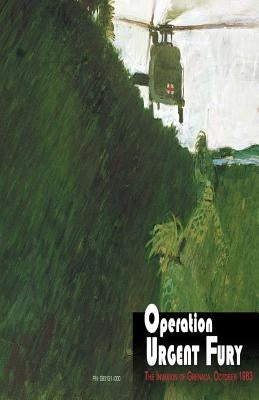
The U.S. Army spent much of the decade after its retreat from Vietnam rebuilding itself into a supremely capable, all-volunteer force. With the application of new doctrine, equipment, and, especially, dynamic leadership at all levels, the Army slowly recovered from that traumatic time. Focused primarily on preparations to counter the Soviet and Warsaw Pact threat to central Europe, the U.S. Army trained hard in conventional operations as enshrined in its primary doctrinal manual, Field Manual 100-5, Operations (1976). Within ten years of the end of U.S. involvement in Vietnam, the Army had rebuilt itself but had only begun to integrate into a joint team capable of fighting in a synchronized multiservice operation. World events, however, have a way of forcing a nation to go to war or, at least, to engage in operations "with the Army it has, and not the Army it wants," to quote a more contemporary statement of how occurrences have a way of surprising policy makers. In the case of Grenada, an obscure island in the Caribbean, the circumstances resulting from an internal power struggle between Communist leaders spilled over into a short, but intense, contingency operation for the U.S. Army.
Author: Edgar F. Raines, Richard W. Stewart
Publisher: Createspace Independent Publishing Platform
Published: 11/22/2013
Pages: 40
Binding Type: Paperback
Weight: 0.13lbs
Size: 8.50h x 5.50w x 0.08d
ISBN13: 9781494241711
ISBN10: 1494241714
BISAC Categories:
- History | United States | 20th Century
Author: Edgar F. Raines, Richard W. Stewart
Publisher: Createspace Independent Publishing Platform
Published: 11/22/2013
Pages: 40
Binding Type: Paperback
Weight: 0.13lbs
Size: 8.50h x 5.50w x 0.08d
ISBN13: 9781494241711
ISBN10: 1494241714
BISAC Categories:
- History | United States | 20th Century
This title is not returnable