
Facility Verification
Please verify the inmate's facility before purchasing.
OR
This Publication is Restricted at this Facility.

Descripción
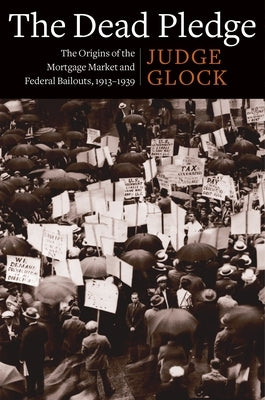
The American government today supports a financial system based on mortgage lending, and it often bails out the financial institutions making these mortgages. The Dead Pledge reveals the surprising origins of American mortgages and American bailouts in policies dating back to the early twentieth century.
Judge Glock shows that the federal government began subsidizing mortgages in order to help lagging sectors of the economy, such as farming and construction. In order to encourage mortgage lending, the government also extended unprecedented assistance to banks. During the Great Depression, the federal government made new mortgage lending and bank bailouts the centerpiece of its recovery program. Both the Herbert Hoover and Franklin Roosevelt administrations created semipublic financial institutions, such as Fannie Mae, to provide cheap, tradable mortgages, and they extended guarantees to more banks and financiers. Ultimately, Glock argues, the desire to protect the financial system took precedence over the desire to help lagging parts of the economy, and the government became ever more tied into the financial world. The Dead Pledge recasts twentieth-century economic, financial, and political history and demonstrates why the greatest "safety net" created in this era was the one supporting finance.Author: Judge Earl Glock
Publisher: Columbia University Press
Published: 04/06/2021
Pages: 304
Binding Type: Paperback
Weight: 0.95lbs
Size: 9.20h x 6.10w x 0.70d
ISBN13: 9780231192538
ISBN10: 0231192533
BISAC Categories:
- History | United States | 20th Century
- Business & Economics | Economic History
- Business & Economics | Banks & Banking
About the Author
Judge Glock is a senior policy advisor with the Cicero Institute, a nonpartisan think tank. His work has been featured in the Journal of American History, Business History Review, National Public Radio, the Wall Street Journal, and the New York Times.