

Description
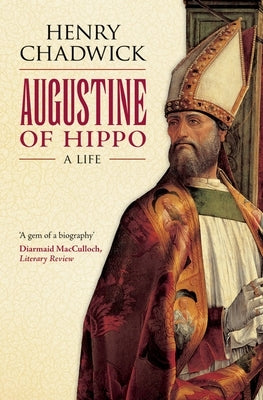
Augustine (354-430) had a profound impact on the development of the Christian Church, sparking controversy and influencing the ideas of theologians for over fifteen centuries. His words are still frequently quoted in devotions today and his key themes retain a striking contemporary relevance--what is the place of the Church in the world? What is the relation between nature and grace? In Augustine of Hippo, the late Henry Chadwick--a renowned authority on Augustine--describes with clarity and warmth the intellectual development of this key Father of the Church. In his characteristically rigorous yet sympathetic style, Chadwick traces Augustine's intellectual journey from schoolboy and student to Bishop and champion of Christendom in a period of intense political upheaval, providing valuable insight into the progression of Augustine's ideas. With a foreword reflecting on Chadwick's distinctive approach to Augustine by Peter Brown, and a further reading list on Augustine compiled by Gillian Clark, this volume is both an essential assessment of Augustine and a final tribute to one of the great church historians of the twentieth century.
Author: Henry Chadwick
Publisher: Oxford University Press, USA
Published: 08/06/2010
Pages: 208
Binding Type: Paperback
Weight: 0.55lbs
Size: 7.90h x 5.30w x 0.80d
ISBN13: 9780199588060
ISBN10: 0199588066
BISAC Categories:
- Religion | Theology
- Religion | Christian Theology | History
Author: Henry Chadwick
Publisher: Oxford University Press, USA
Published: 08/06/2010
Pages: 208
Binding Type: Paperback
Weight: 0.55lbs
Size: 7.90h x 5.30w x 0.80d
ISBN13: 9780199588060
ISBN10: 0199588066
BISAC Categories:
- Religion | Theology
- Religion | Christian Theology | History
About the Author
Henry Chadwick (1920-2008) enjoyed international renown as one of the leading church historians of the twentieth century. He held senior appointments at both Oxford and Cambridge Universities, latterly as Emeritus Regius Professor of Divinity, Cambridge. Chadwick's scholarship was complemented by his active involvement in church life. Ordained a priest in the Church of England in 1944, he developed a deep commitment to church unity and took a leading role in the Anglican and Roman Catholic dialogues of the mid-1970s.