
Facility Verification
Please verify the inmate's facility before purchasing.
OR
This Publication is Restricted at this Facility.

Description
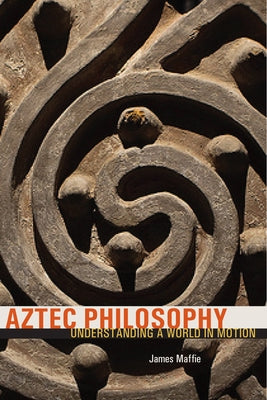
In Aztec Philosophy, James Maffie shows the Aztecs advanced a highly sophisticated and internally coherent systematic philosophy worthy of consideration alongside other philosophies from around the world. Bringing together the fields of comparative world philosophy and Mesoamerican studies, Maffie excavates the distinctly philosophical aspects of Aztec thought. Aztec Philosophy focuses on the ways Aztec metaphysics-the Aztecs' understanding of the nature, structure and constitution of reality-underpinned Aztec thinking about wisdom, ethics, politics, \ and aesthetics, and served as a backdrop for Aztec religious practices as well as everyday activities such as weaving, farming, and warfare. Aztec metaphysicians conceived reality and cosmos as a grand, ongoing process of weaving-theirs was a world in motion. Drawing upon linguistic, ethnohistorical, archaeological, historical, and contemporary ethnographic evidence, Maffie argues that Aztec metaphysics maintained a processive, transformational, and non-hierarchical view of reality, time, and existence along with a pantheistic theology. Aztec Philosophy will be of great interest to Mesoamericanists, philosophers, religionists, folklorists, and Latin Americanists as well as students of indigenous philosophy, religion, and art of the Americas.
Author: James Maffie
Publisher: University Press of Colorado
Published: 09/01/2015
Pages: 608
Binding Type: Paperback
Weight: 1.80lbs
Size: 8.90h x 6.00w x 1.10d
ISBN13: 9781607324614
ISBN10: 160732461X
BISAC Categories:
- Social Science | Anthropology | General
- Philosophy | History & Surveys | Modern
Author: James Maffie
Publisher: University Press of Colorado
Published: 09/01/2015
Pages: 608
Binding Type: Paperback
Weight: 1.80lbs
Size: 8.90h x 6.00w x 1.10d
ISBN13: 9781607324614
ISBN10: 160732461X
BISAC Categories:
- Social Science | Anthropology | General
- Philosophy | History & Surveys | Modern
About the Author
James Maffie is principal lecturer in the Department of Philosophy and affiliate of the Latin American Studies Program at the University of Maryland.