
Facility Verification
Please verify the inmate's facility before purchasing.
OR
This Publication is Restricted at this Facility.

Description
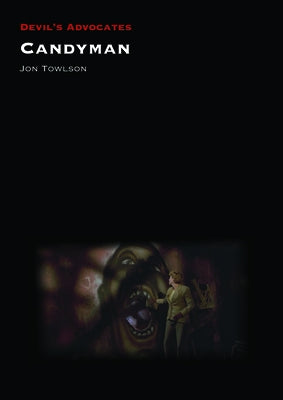
When Candyman was released in 1992, Roger Ebert gave it his thumbs up, remarking that the film was "scaring him with ideas and gore, rather than just gore." Indeed, Candyman is almost unique in 1990s horror cinema in that it tackles its sociopolitical themes head on. As critic Kirsten Moana Thompson has remarked, Candyman is "the return of the repressed as national allegory" the film's hook-handed killer of urban legend embodies a history of racism, miscegenation, lynching, and slavery, "the taboo secrets of America's past and present." In this book, Jon Towlson considers how Candyman might be read both as a "return of the repressed" during the George H. W. Bush era, and as an example of nineties neoconservative horror. He traces the project's development from its origins as a Clive Barker short story ("The Forbidden"); discusses the importance of its gritty real-life Cabrini-Green setting; and analyzes the film's appropriation (and interrogation) of urban myth. The two official sequels (Candyman: Farewell to the Flesh [1995] and Candyman: Day of the Dead [1999]) are also considered, plus a number of other urban myth-inspired horror movies such as Bloody Mary (2006) and films in the Urban Legend franchise. The book features an in-depth interview with Candyman's writer-director Bernard Rose.
Author: Jon Towlson
Publisher: Liverpool University Press
Published: 05/15/2018
Pages: 120
Binding Type: Paperback
Weight: 0.30lbs
Size: 7.40h x 5.40w x 0.40d
ISBN13: 9781911325543
ISBN10: 191132554X
BISAC Categories:
- Performing Arts | Film | History & Criticism
- Performing Arts | Film | Guides & Reviews
Author: Jon Towlson
Publisher: Liverpool University Press
Published: 05/15/2018
Pages: 120
Binding Type: Paperback
Weight: 0.30lbs
Size: 7.40h x 5.40w x 0.40d
ISBN13: 9781911325543
ISBN10: 191132554X
BISAC Categories:
- Performing Arts | Film | History & Criticism
- Performing Arts | Film | Guides & Reviews
About the Author
Jon Towlson is the author of The Turn to Gruesomeness in American Horror Films, 1931-1936 (2016); Close Encounters of the Third Kind (Auteur, 2016); and the Rondo Hatton Classic Horror Award-nominated Subversive Horror Cinema: Countercultural Messages of Films from Frankenstein to the Present (2014).