
Facility Verification
Please verify the inmate's facility before purchasing.
OR
This Publication is Restricted at this Facility.

Description
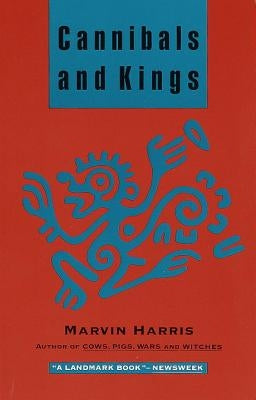
In this brilliant and profound study the distinguished American anthropologist Marvin Harris shows how the endless varieties of cultural behavior -- often so puzzling at first glance -- can be explained as adaptations to particular ecological conditions. His aim is to account for the evolution of cultural forms as Darwin accounted for the evolution of biological forms: to show how cultures adopt their characteristic forms in response to changing ecological modes. A] magisterial interpretation of the rise and fall of human cultures and societies. -- Robert Lekachman, Washington Post Book World Its persuasive arguments asserting the primacy of cultural rather than genetic or psychological factors in human life deserve the widest possible audience. -- Gloria Levitas The New Leader An] original and...urgent theory about the nature of man and at the reason that human cultures take so many diverse shapes. -- The New Yorker Lively and controversial. -- I. Bernard Cohen, front page, The New York Times Book Review
Author: Marvin Harris
Publisher: Vintage
Published: 06/04/1991
Pages: 368
Binding Type: Paperback
Weight: 0.60lbs
Size: 8.00h x 5.10w x 0.90d
ISBN13: 9780679728498
ISBN10: 067972849X
BISAC Categories:
- Social Science | Anthropology | General
- Social Science | Sociology | General
Author: Marvin Harris
Publisher: Vintage
Published: 06/04/1991
Pages: 368
Binding Type: Paperback
Weight: 0.60lbs
Size: 8.00h x 5.10w x 0.90d
ISBN13: 9780679728498
ISBN10: 067972849X
BISAC Categories:
- Social Science | Anthropology | General
- Social Science | Sociology | General
About the Author
Marvin Harris taught at Columbia University from 1953 and from 1963 to 1966 was Chairman of the Department of Anthropology. He has lectured by invitation at most of the major colleges and universities in the United States. In addition to field work in Brazil, Mozambique, and Ecuador on the subjects of cross-cultural aspects of race and ethinic relations, the effects of colonialism, and problems of underdevelopment seen in ecological perspective, Harris pioneered in the use of videotape techniques in the study of family life in this country.