
Facility Verification
Please verify the inmate's facility before purchasing.
This Publication is Restricted at this Facility.

Description
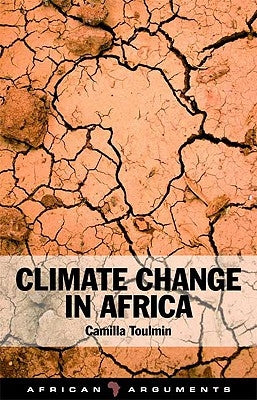
Climate change is a major challenge for us all, but for African countries it represents a particular threat. This book outlines current thinking and evidence and the impact such change will have on Africa's development prospects.
Global warming above the level of two degrees Celsius would be enormously damaging for poorer parts of the world, leading to crises with crops, livestock, water supplies and coastal areas. Within Africa, it's likely to be the continent's poorest people who are hit hardest. In this accessible and authoritative introduction to an often-overlooked aspect of the environment, Camilla Toulmin uses case studies to look at issues ranging from natural disasters to biofuels, and from conflict to the oil industry. Finally, the book addresses what future there might be for Africa in a carbon-constrained world.Author: Camilla Toulmin
Publisher: Bloomsbury Publishing PLC
Published: 12/01/2009
Pages: 192
Binding Type: Paperback
Weight: 0.45lbs
Size: 7.70h x 5.00w x 0.40d
ISBN13: 9781848130159
ISBN10: 1848130155
BISAC Categories:
- Science | Earth Sciences | Meteorology & Climatology
- Science | Environmental Science (see also Chemistry | Environmental)
- Social Science | Regional Studies
About the Author
Camilla Toulmin is Director of the International Institute for Environment & Development. An economist by training, she has worked mainly in Africa on social, economic, and environmental development. This has combined field research, policy analysis, capacity building and advocacy. Her work has aimed to understand how societies evolve to cope with changed circumstances, and to demonstrate the links between global and local levels.
Camilla Toulmin is Director of the International Institute for Environment & Development. An economist by training, she has worked mainly in Africa on social, economic, and environmental development. This has combined field research, policy analysis, capacity building and advocacy. Her work has aimed to understand how societies evolve to cope with changed circumstances, and to demonstrate the links between global and local levels.