
Facility Verification
Please verify the inmate's facility before purchasing.
OR
This Publication is Restricted at this Facility.

Description
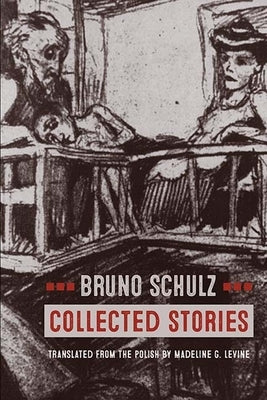
Winner of the 2019 Found in Translation Award Collected Stories is an authoritative new translation of the complete fiction of Bruno Schulz, whose work has influenced writers as various as Salman Rushdie, Cynthia Ozick, Jonathan Safran Foer, Philip Roth, Danilo Kis, and Roberto Bolaño. Schulz's prose is renowned for its originality. Set largely in a fictional counterpart of his hometown of Drohobych, his stories merge the real and the surreal. The most ordinary objects--the wind, an article of clothing, a plate of fish--can suddenly appear unfathomably mysterious and capable of illuminating profound truths. As Father, one of his most intriguing characters, declaims: "Matter has been granted infinite fecundity, an inexhaustible vital force, and at the same time, a seductive power of temptation that entices us to create forms." This comprehensive volume brings together all of Schulz's published stories--Cinnamon Shops, his most famous collection (sometimes titled The Street of Crocodiles in English), The Sanatorium under the Hourglass, and an additional four stories that he did not include in either of his collections. Madeline G. Levine's masterful new translation shows contemporary readers how Schulz, often compared to Proust and Kafka, reveals the workings of memory and consciousness.
Author: Bruno Schulz
Publisher: Northwestern University Press
Published: 03/15/2018
Pages: 288
Binding Type: Paperback
Weight: 0.85lbs
Size: 8.90h x 6.00w x 0.80d
ISBN13: 9780810136601
ISBN10: 0810136600
BISAC Categories:
- Fiction | Classics
- Fiction | Literary
Author: Bruno Schulz
Publisher: Northwestern University Press
Published: 03/15/2018
Pages: 288
Binding Type: Paperback
Weight: 0.85lbs
Size: 8.90h x 6.00w x 0.80d
ISBN13: 9780810136601
ISBN10: 0810136600
BISAC Categories:
- Fiction | Classics
- Fiction | Literary
About the Author
BRUNO SCHULZ (1892-1942) was a Polish Jew born in Drohobych, at the time a city in Austrian Galicia. He published two volumes of short fiction during his life. Shot in the street by a Nazi officer in German-occupied Drohobych, Schulz achieved posthumous fame as one of the most influential European fiction writers of the twentieth century.