
Facility Verification
Please verify the inmate's facility before purchasing.
OR
This Publication is Restricted at this Facility.

Description
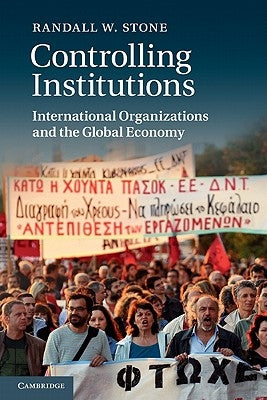
How is the United States able to control the IMF with only 17% of the votes? How are the rules of the global economy made? This book shows how a combination of formal and informal rules explain how international organizations really work. Randall W. Stone argues that formal rules apply in ordinary times, while informal power allows leading states to exert control when the stakes are high. International organizations are therefore best understood as equilibrium outcomes that balance the power and interests of the leading state and the member countries. Presenting a new model of institutional design and comparing the IMF, WTO and EU, Stone argues that institutional variations reflect the distribution of power and interests. He shows that US interests influence the size, terms and enforcement of IMF programs, and new data, archival documents and interviews reveal the shortcomings of IMF programs in Mexico, Russia, Korea, Indonesia and Argentina.
Author: Randall W. Stone
Publisher: Cambridge University Press
Published: 03/03/2011
Pages: 274
Binding Type: Paperback
Weight: 0.90lbs
Size: 8.70h x 5.90w x 0.60d
ISBN13: 9780521183062
ISBN10: 0521183065
BISAC Categories:
- Political Science | International Relations | General
Author: Randall W. Stone
Publisher: Cambridge University Press
Published: 03/03/2011
Pages: 274
Binding Type: Paperback
Weight: 0.90lbs
Size: 8.70h x 5.90w x 0.60d
ISBN13: 9780521183062
ISBN10: 0521183065
BISAC Categories:
- Political Science | International Relations | General
This title is not returnable