
Facility Verification
Please verify the inmate's facility before purchasing.
OR
This Publication is Restricted at this Facility.

Description
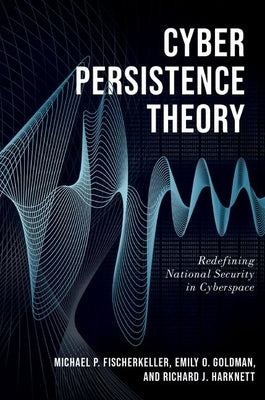
A bold re-conceptualization of the fundamentals driving behavior and dynamics in cyberspace. Most cyber operations and campaigns fall short of activities that states would regard as armed conflict. In Cyber Persistence Theory, Michael P. Fischerkeller, Emily O. Goldman, and Richard J. Harknett argue that a failure to understand this strategic competitive space has led many states to misapply the logic and strategies of coercion and conflict to this environment and, thus, suffer strategic loss as a result. The authors show how the paradigm of deterrence theory can neither explain nor manage the preponderance of state cyber activity. They present a new theory that illuminates the exploitive, rather than coercive, dynamics of cyber competition and an analytical framework that can serve as the basis for new strategies of persistence. Drawing on their policy experience, they offer a new set of prescriptions to guide policymakers toward a more stable, secure cyberspace.
Author: Michael P. Fischerkeller, Emily O. Goldman, Richard J. Harknett
Publisher: Oxford University Press, USA
Published: 05/20/2022
Pages: 272
Binding Type: Paperback
Weight: 0.85lbs
Size: 8.90h x 5.90w x 0.70d
ISBN13: 9780197638262
ISBN10: 0197638260
BISAC Categories:
- Political Science | International Relations | General
- Political Science | Intelligence & Espionage
- Science | Life Sciences | Cell Biology
Author: Michael P. Fischerkeller, Emily O. Goldman, Richard J. Harknett
Publisher: Oxford University Press, USA
Published: 05/20/2022
Pages: 272
Binding Type: Paperback
Weight: 0.85lbs
Size: 8.90h x 5.90w x 0.70d
ISBN13: 9780197638262
ISBN10: 0197638260
BISAC Categories:
- Political Science | International Relations | General
- Political Science | Intelligence & Espionage
- Science | Life Sciences | Cell Biology
About the Author
Michael Fischerkeller is a research staff member in the Information, Technology and Systems Division at the Institute for Defense Analyses, a Federally Funded Research and Development Center. Michael has spent his entire professional career supporting the Office of the Secretary of Defense, Joint Chiefs of Staff, Combatant and Multi-National Force commanders, and the Intelligence Community. His areas of expertise are cyber strategy, strategic / operational concept development, and analysis / assessment.