
Facility Verification
Please verify the inmate's facility before purchasing.
This Publication is Restricted at this Facility.

Description
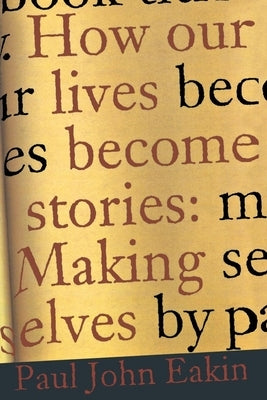
The popularity of such books as Frank McCourt's Angela's Ashes, Mary Karr's The Liars' Club, and Kathryn Harrison's controversial The Kiss, has led columnists to call ours "the age of memoir." And while some critics have derided the explosion of memoir as exhibitionistic and self-aggrandizing, literary theorists are now beginning to look seriously at this profusion of autobiographical literature. Informed by literary, scientific, and experiential concerns, How Our Lives Become Stories enhances knowledge of the complex forces that shape identity, and confronts the equally complex problems that arise when we write about who we think we are.
Using life writings as examples--including works by Christa Wolf, Art Spiegelman, Oliver Sacks, Henry Louis Gates, Melanie Thernstrom, and Philip Roth--Paul John Eakin draws on the latest research in neurology, cognitive science, memory studies, developmental psychology, and related fields to rethink the very nature of self-representation. After showing how the experience of living in one's body shapes one's identity, he explores relational and narrative modes of being, emphasizing social sources of identity, and demonstrating that the self and the story of the self are constantly evolving in relation to others. Eakin concludes by engaging the ethical issues raised by the conflict between the authorial impulse to life writing and a traditional, privacy-based ethics that such writings often violate.
Author: Paul John Eakin
Publisher: Cornell University Press
Published: 10/15/1999
Pages: 224
Binding Type: Paperback
Weight: 0.58lbs
Size: 8.47h x 5.49w x 0.59d
ISBN13: 9780801485985
ISBN10: 0801485983
BISAC Categories:
- Literary Criticism | Books & Reading
About the Author
Paul John Eakin is Ruth N. Halls Professor Emeritus of English at Indiana University. He is also the author of The New England Girl: Cultural Ideals in Hawthorne, Stowe, Howells, and James; Fictions in Autobiography: Studies in the Art of Self-Invention; and Touching the World: Reference in Autobiography. He is the editor of The Ethics of Life Writing, also from Cornell; On Autobiography by Philippe Lejeune, and American Autobiography: Retrospect and Prospect.