
Facility Verification
Please verify the inmate's facility before purchasing.
This Publication is Restricted at this Facility.
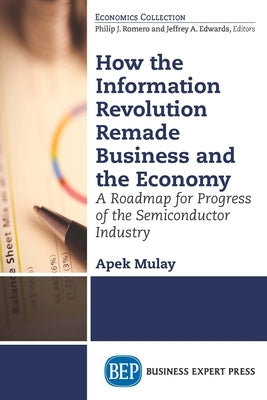

Description
Author: Apek Mulay
Publisher: Business Expert Press
Published: 12/08/2016
Pages: 150
Binding Type: Paperback
Weight: 0.54lbs
Size: 9.00h x 6.00w x 0.38d
ISBN13: 9781631575891
ISBN10: 1631575899
BISAC Categories:
- Business & Economics | Economics | Macroeconomics
About the Author
Apek Mulay is founder of Mulay's Consultancy Services and an entrepreneur with WFG. He authored several books such as (2014), Sustaining Moore's Law: Uncertainty Leading to a Certainty of IoT Revolution (2015), How Information Revolution Remade the Business and the Economy: A Roadmap for Progress of the Semiconductor Industry (2016), New Macroeconomics (2018) and edited Economic Renaissance in the Age of Artificial Intelligence (2019). He has also authored a monograph on technology and a patent entitled Surface Imaging with Materials Identified by Colors. He holds two masters degrees-one in electrical engineering from Texas Tech and other in business analytics from The University of Texas at Dallas.