
Facility Verification
Please verify the inmate's facility before purchasing.
OR
This Publication is Restricted at this Facility.

Description
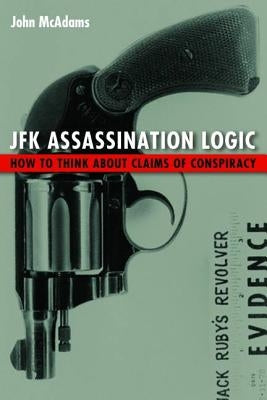
The mother of all conspiracy theories concerns the assassination of President John F. Kennedy. Many of its elements have even become part of American folklore: the single bullet, the grassy knoll shooter, and the mysterious deaths of interested parties. JFK Assassination Logic shows how to approach such conspiracy claims. Studying Lee Harvey Oswald's character and personality, for example, doesn't help determine whether he alone shot the president, and our opinion of bureaucrats can often cloud our judgments. How people view the JFK assassination can be a model for how (or how not) to evaluate other conspiracy theories, including those generally considered dubious-such as President Roosevelt's foreknowledge of Pearl Harbor, desert staging of the 1969 moon landing, and U.S. government involvement in 9/11-as well as those based on fact, such as Watergate. John McAdams addresses not only conspiracy theories but also how to think, reason, and judge evidence in such cases. By putting the JFK assassination under the microscope, McAdams provides a blueprint for understanding how conspiracy theories arise and how to judge the evidence. JOHN MCADAMS is an associate professor of political science at Marquette University. His articles have appeared in journals including American Journal of Political Science, Journal of Politics, Sociological Quarterly, and Law and Contemporary Problems.
Author: John McAdams
Publisher: University of Nebraska Press
Published: 09/01/2014
Pages: 328
Binding Type: Paperback
Weight: 1.00lbs
Size: 8.90h x 6.00w x 1.00d
ISBN13: 9781612347059
ISBN10: 1612347053
BISAC Categories:
- History | United States | 20th Century
- Political Science | American Government | Executive Branch
- Social Science | Conspiracy Theories
Author: John McAdams
Publisher: University of Nebraska Press
Published: 09/01/2014
Pages: 328
Binding Type: Paperback
Weight: 1.00lbs
Size: 8.90h x 6.00w x 1.00d
ISBN13: 9781612347059
ISBN10: 1612347053
BISAC Categories:
- History | United States | 20th Century
- Political Science | American Government | Executive Branch
- Social Science | Conspiracy Theories
About the Author
JOHN MCADAMS is an associate professor of political science at Marquette University. His articles have appeared in journals including American Journal of Political Science, Journal of Politics, Sociological Quarterly, and Law and Contemporary Problems.