
Facility Verification
Please verify the inmate's facility before purchasing.
OR
This Publication is Restricted at this Facility.

Description
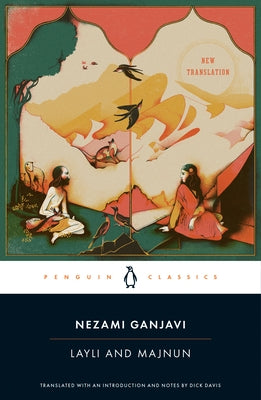
The Persian epic that inspired Eric Clapton's unforgettable love song "Layla" and that Lord Byron called "the Romeo and Juliet of the East," in a masterly new translation A Penguin Classic The iconic love story of the Middle East, by a twelfth-century Persian poet who has been compared to Shakespeare for his subtlety, inventiveness, and dramatic force, Layli and Majnun tells of star-crossed lovers whose union is tragically thwarted by their families and whose passion continues to ripple out across the centuries. Theirs is a love that lasts a lifetime, and in Nezami's immortal telling, erotic longing blends with spiritual self-denial in an allegory of Sufi aspiration, as the amenities of civilization give way to the elemental wilderness, desire is sublimated into a mystical renunciation of the physical world, and the soul confronts its essence. This is a tour de force of Persian literature, in a translation that captures the extraordinary power and virtuosity of the original.
Author: Nezami Ganjavi
Publisher: Penguin Classics
Published: 02/09/2021
Pages: 320
Binding Type: Paperback
Weight: 0.48lbs
Size: 7.60h x 5.00w x 0.70d
ISBN13: 9780143133995
ISBN10: 0143133993
BISAC Categories:
- Poetry | Middle Eastern
- Poetry | Ancient & Classical
Author: Nezami Ganjavi
Publisher: Penguin Classics
Published: 02/09/2021
Pages: 320
Binding Type: Paperback
Weight: 0.48lbs
Size: 7.60h x 5.00w x 0.70d
ISBN13: 9780143133995
ISBN10: 0143133993
BISAC Categories:
- Poetry | Middle Eastern
- Poetry | Ancient & Classical
About the Author
Nezami Ganjavi (1141-1209) is considered the greatest romantic epic poet in Persian literature. A Sunni Muslim born to a Persian father and a Kurdish mother, he lived most of his life in his hometown of Ganjeh, in present-day Azerbaijan. He was married three times; all three of his wives predeceased him, and, rarely for a Persian poet of his time, he wrote with apparently heartfelt and surprisingly personal eloquence about his affection for them and his sorrow at losing them. His introduction of an element of mysticism into his romance narratives is an innovation that was followed by most of his many imitators.