
Facility Verification
Please verify the inmate's facility before purchasing.
This Publication is Restricted at this Facility.

Description
Stories of loners, outsiders, tricksters, addicts, jazzmen, and drifters in the Jim Crow South--a classic of 1950s Black fiction.
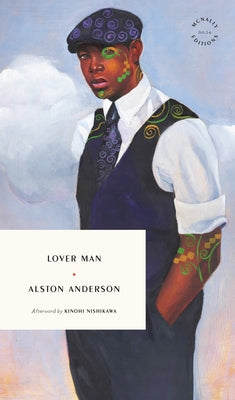
Raw, fearless, ironic, the stories in Lover Man (1958) promised the birth of a new sensibility in American fiction. Inspired by the bebop he loved, and the philosophy he studied at the Sorbonne, Alston Anderson looked back at the North Carolina of his youth to capture the hidden lives of Black boys and men in the early 1940s. Fascinated by loners and outsiders--tricksters, addicts, jazzmen, drifters, "queers"--and by the spiritual cost exacted by the myths of white supremacy, Anderson assembled an original kind of story collection, whose themes troubled and bewildered many of his early readers. Although later championed by Langston Hughes and Henry Louis Gates. Jr., among others, this--his only collection--has remained out of print since the '50s.
In his afterword to this new edition, the literary historian Kinohi Nishikawa investigates Anderson's pief but pilliant career, the controversy his work provoked, and the light it sheds on his era.
Author: Alston Anderson
Publisher: McNally Editions
Published: 02/07/2023
Pages: 208
Binding Type: Paperback
Weight: 0.70lbs
Size: 8.20h x 5.10w x 0.90d
ISBN13: 9781946022547
ISBN10: 1946022543
BISAC Categories:
- Fiction | Literary
- Fiction | African American & Black | General
- Fiction | Small Town & Rural
About the Author
Alston Anderson (1924-2008) was born in Panama to Jamaican parents who brought him to North Carolina as a child. After serving in the Army during World War II, Anderson attended North Carolina College and Columbia University on the G.I. Bill, as well as the Sorbonne, where he studied German philosophy. Moving in expatriate circles, he overlapped with James Baldwin at Yaddo, stayed with Robert Graves in Majorca, and co-interviewed Nelson Algren with Terry Southern for the Paris Review. After Lover Man, he published one novel, All God's Children, a critical and commercial failure. Following a series of personal and professional ruptures, Anderson vanished from the public record in the early 1970s until the time of his death in New York's Bellevue Hospital.