Description
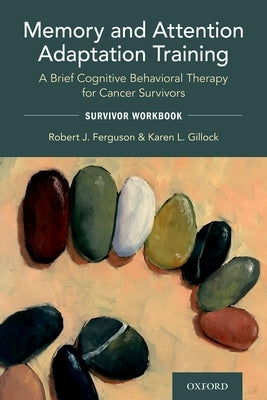
Cancer-related cognitive impairment (CRCI) may affect nearly half of all cancer survivors and can persist for years after completing cancer treatment. Memory and Attention Adaptation Training (MAAT) is a cognitive-behavioral therapy offering evidence-based, nonpharmacological treatment of this common survivorship condition. Organized into a session-by-session Clinician Manual and related Survivor Workbook, MAAT is conducted in 8 treatment visits and has been demonstrated effective when delivered through telehealth technology, so survivors can readily fit MAAT into their busy lives. The Survivor Workbook starts with a brief overview of what is understood about CRCI, common problems, and how MAAT helps. The introduction is followed by the 8 visits summarized in concise chapters that allow for easy review after the therapy visit. Thus, survivors with memory problems have a reliable source to turn to so that content of visits is not forgotten. Each visit consists of homework exercises with easy to follow forms.
Author: Robert Ferguson, Karen Gillock
Publisher: Oxford University Press, USA
Published: 04/16/2021
Pages: 112
Binding Type: Paperback
Weight: 0.40lbs
Size: 8.20h x 5.40w x 0.30d
ISBN13: 9780197521526
ISBN10: 0197521525
BISAC Categories:
- Medical | Psychiatry | General
- Medical | Oncology | General
- Psychology | Clinical Psychology
Author: Robert Ferguson, Karen Gillock
Publisher: Oxford University Press, USA
Published: 04/16/2021
Pages: 112
Binding Type: Paperback
Weight: 0.40lbs
Size: 8.20h x 5.40w x 0.30d
ISBN13: 9780197521526
ISBN10: 0197521525
BISAC Categories:
- Medical | Psychiatry | General
- Medical | Oncology | General
- Psychology | Clinical Psychology
About the Author
Robert J. Ferguson, PhD, is a clinical psychologist and Assistant Professor of Medicine with the Division of Hematology/Oncology at the University of Pittsburgh School of Medicine and UPMC Hillman Cancer Center. His clinical and research interests are the treatment of cognitive effects of cancer, cancer survivorship and palliative care. He is the author of numerous peer reviewed research articles and book chapters on treatment of cancer-related cognitive impairment and other topics related to the field of behavioral medicine. His research has been funded by grants from the National Cancer Institute, NIH Office of Research on Women's Health, and private foundations.