
Facility Verification
Please verify the inmate's facility before purchasing.
OR
This Publication is Restricted at this Facility.

Description
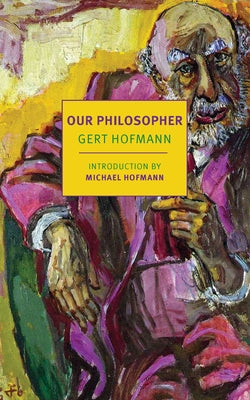
A powerful novel about prejudice, violence, and complicity in Nazi Germany, this spare and evocative work interrogates shows how a group of people can slip towards extremism and barbarity in the blink of an eye. The time is the 1930s. Our philosopher is Herr Veilchenfeld, a renowned thinker and distinguished professor, who, after his sudden dismissal from the university, has retired to live quietly in a country town in the east of Germany. Our narrator is Hans, a clever and inquisitive boy. He relates a mix of things he witnesses himself and things he hears about from his father, the town doctor, who sees all sorts of people as he makes his rounds, even Veilchenfeld, with his troubled heart. Veilchenfeld is in decline, it's true--he keeps ever more to himself--but the town is in ever better shape. After the defeat of the Great War and the subsequent years of poverty, things are looking up. The old, worn people are heartened to see it. The young are exhilarated. It is up to them to promote and patrol this new uplifting reality--to make it safe from the likes of Veilchenfeld, whose very existence is an affront to it. And so the doctor listens, and young Hans looks on.
Author: Gert Hofmann
Publisher: New York Review of Books
Published: 09/26/2023
Pages: 176
Binding Type: Paperback
Weight: 0.40lbs
Size: 8.10h x 5.10w x 0.60d
ISBN13: 9781681377582
ISBN10: 1681377586
BISAC Categories:
- Fiction | Historical | 20th Century | World War II
- Fiction | World Literature | Germany | 20th Century
- Fiction | Small Town & Rural
Author: Gert Hofmann
Publisher: New York Review of Books
Published: 09/26/2023
Pages: 176
Binding Type: Paperback
Weight: 0.40lbs
Size: 8.10h x 5.10w x 0.60d
ISBN13: 9781681377582
ISBN10: 1681377586
BISAC Categories:
- Fiction | Historical | 20th Century | World War II
- Fiction | World Literature | Germany | 20th Century
- Fiction | Small Town & Rural
About the Author
Gert Hofmann (1931-1993) was a German writer and scholar of German literature. Originally an author of radio plays, he became one of postwar Germany's most prolific novelists, his fiction often examining the continued resonance of Nazism in Germany. His accolades include the Ingeborg-Bachmann Prize and the Alfred Döblin Prize.