
Facility Verification
Please verify the inmate's facility before purchasing.
OR
This Publication is Restricted at this Facility.

Description
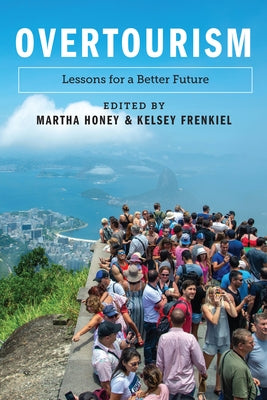
Before COVID-19 hit, the biggest problem in the world of travel was overtourism. Crowds threatened to spoil natural environments and make daily life unbearable for residents of popular travel destinations. Then, seemingly overnight, tourism nearly ceased. Yet there is no question that travel will resume; the only question is, when it does, what will it look like? Will we return to a world of overrun monuments, littered beaches, and gridlocked city streets? Or can we do things differently this time? Overtourism: Lessons for a Better Future charts a path toward tourism that is truly sustainable, focusing on the triple bottom line of people, planet, and prosperity. Bringing together tourism officials, city council members, travel journalists, consultants, scholars, and trade association members, this practical book explores overcrowding from a variety of perspectives. After examining the causes and effects of overtourism, it turns to management approaches in five distinct types of tourism destinations: 1. historic cities;
2. national parks and protected areas;
3. World Heritage Sites;
4. beaches and coastal communities; and
5. destinations governed by regional and national authorities. While each location presents its own challenges, common mitigation strategies are emerging. Visitor education, traffic planning, and redirection to lesser-known sites are among the measures that can protect the economic benefit of tourism without overwhelming local communities. As tourism revives around the world, these innovations will guide government agencies, parks officials, site managers, civic groups, environmental NGOs, tourism operators, and others with a stake in protecting our most iconic places.
Author: Martha Honey
Publisher: Island Press
Published: 05/27/2021
Pages: 400
Binding Type: Paperback
Weight: 1.06lbs
Size: 8.90h x 6.00w x 0.70d
ISBN13: 9781642830767
ISBN10: 1642830763
BISAC Categories:
- Travel | Special Interest | Ecotourism
- Nature | Environmental Conservation & Protection | General
- Business & Economics | Green Business
2. national parks and protected areas;
3. World Heritage Sites;
4. beaches and coastal communities; and
5. destinations governed by regional and national authorities. While each location presents its own challenges, common mitigation strategies are emerging. Visitor education, traffic planning, and redirection to lesser-known sites are among the measures that can protect the economic benefit of tourism without overwhelming local communities. As tourism revives around the world, these innovations will guide government agencies, parks officials, site managers, civic groups, environmental NGOs, tourism operators, and others with a stake in protecting our most iconic places.
Author: Martha Honey
Publisher: Island Press
Published: 05/27/2021
Pages: 400
Binding Type: Paperback
Weight: 1.06lbs
Size: 8.90h x 6.00w x 0.70d
ISBN13: 9781642830767
ISBN10: 1642830763
BISAC Categories:
- Travel | Special Interest | Ecotourism
- Nature | Environmental Conservation & Protection | General
- Business & Economics | Green Business
About the Author
Martha Honey is a co-founder and former Executive Director of the Center for Responsible Travel (CREST), based in Washington, DC. Her previous books include Cruise Tourism in the Caribbean: Selling Sunshine (Routledge Press, 2019), Ecotourism and Sustainable Development: Who Owns Paradise? (Island Press, 1998 and 2008) and Ecotourism and Certification: Setting Standards in Practice (Island Press, 2002). She worked as a journalist for 20 years, based in Tanzania and Costa Rica.