

Description
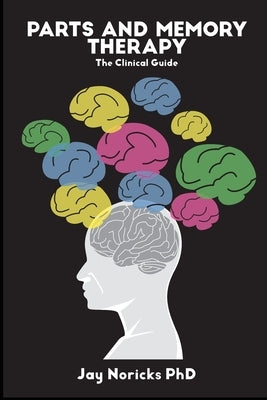
A "Part" with a capital "P" is the term I use to reference what other scholars call parts, ego states, sides, subpersonalities, voices, self-states, and many more. I will sometimes use the word "subpersonality" or "ego state" in place of "Part" to avoid monotony and also to make specific grammatical issues easier to negotiate. These terms refer to natural subdivisions in what we usually call our personality or our self. The bottom line is that the self or personality is not unitary; it's made up of many Parts...
The Guide describe many other variations in how Parts present themselves. But Parts are only half of the elements need to make P&MT work. The other half is the visualization of change that leads to permanently neutralizing the emotional memories that maintain the problem. Our interventions take advantage of memory reconsolidation, a recently discovered natural neurological process in memory formation and reformation. As utilized in our model, it permits us to neutralize the disturbing emotional memories (such as fear, grief, anger) without changing the factual, autobiographical narrative that lies at the heart of our patients' difficulties. Previously, such emotional memories were thought to be indelible. In the therapy, we confront the wounded Part of the self that carries the pain of the trauma with information or action that contradicts or creates a mismatch with the Part's expectation of continuation of its pain. That neutralizes the memory.
Author: Jay Noricks
Publisher: New University Press LLC
Published: 02/28/2022
Pages: 188
Binding Type: Paperback
Weight: 0.62lbs
Size: 9.00h x 6.00w x 0.43d
ISBN13: 9780996929110
ISBN10: 0996929118
BISAC Categories:
- Psychology | Psychotherapy | Counseling
- Psychology | Psychopathology | Dissociative Identity Disorder
- Social Science | Anthropology | Cultural & Social