
Facility Verification
Please verify the inmate's facility before purchasing.
OR
This Publication is Restricted at this Facility.

Description
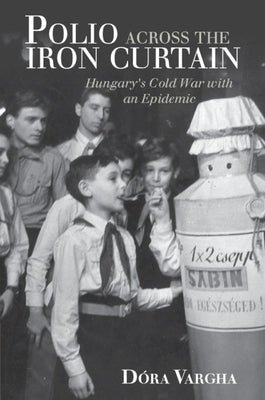
By the end of the 1950s, Hungary became an unlikely leader in what we now call global health. Only three years after Soviet tanks crushed the revolution of 1956, Hungary became one of the first countries to introduce the Sabin vaccine into its national vaccination programme. This immunization campaign was built on years of scientific collaboration between East and West, in which scientists, specimens, vaccines and iron lungs crossed over the Iron Curtain. D ra Vargha uses a series of polio epidemics in communist Hungary to understand the response to a global public health emergency in the midst of the Cold War. She argues that despite the antagonistic international atmosphere of the 1950s, spaces of transnational corporation between blocs emerged to tackle a common health crisis. At the same time, she shows that epidemic concepts and policies were influenced by the very Cold War rhetoric that medical and political cooperation transcended. This title is also available as Open Access.
Author: Dóra Vargha
Publisher: Cambridge University Press
Published: 01/28/2021
Pages: 266
Binding Type: Paperback
Weight: 0.80lbs
Size: 9.00h x 6.00w x 0.56d
ISBN13: 9781108431019
ISBN10: 1108431011
BISAC Categories:
- Medical | History
- Medical | Neurology
Author: Dóra Vargha
Publisher: Cambridge University Press
Published: 01/28/2021
Pages: 266
Binding Type: Paperback
Weight: 0.80lbs
Size: 9.00h x 6.00w x 0.56d
ISBN13: 9781108431019
ISBN10: 1108431011
BISAC Categories:
- Medical | History
- Medical | Neurology
This title is not returnable