
Facility Verification
Please verify the inmate's facility before purchasing.
This Publication is Restricted at this Facility.

Description
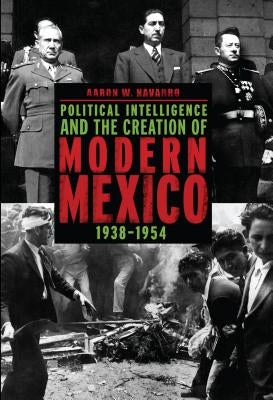
Mexican politics in the twentieth century was dominated by two complementary paradigms: the rhetoric of the Mexican Revolution and the existence of an "official" party. The Mexican Revolution has enjoyed a long and voluminous historiography; the "official" party has not. While the importance of the Revolution as a historical period is self-evident, the development of a party based on the political aspirations of the surviving revolutionary elites has not generally sparked as much historical interest. This book traces the path of the party, founded as the Partido Nacional Revolucionario (PNR), through its reformation as the Partido de la Revolución Mexicana (PRM) in 1938 and then as the Partido Revolucionario Institucional (PRI) in 1946, which finally fell from power in 2000. Aaron Navarro shows how the transformation of the PRM into the PRI, the removal of the military from electoral politics, the resettlement of younger officers in the intelligence services, and the inculcation of a new discipline among political elites all produced the conditions that allowed for the dominance of a single-party structure for decades.
Author: Aaron W. Navarro
Publisher: Penn State University Press
Published: 11/15/2012
Pages: 320
Binding Type: Paperback
Weight: 1.05lbs
Size: 9.00h x 5.90w x 0.90d
ISBN13: 9780271037066
ISBN10: 0271037067
BISAC Categories:
- Political Science | Political Process | Political Parties
- History | Latin America | Mexico
- History | Modern | 20th Century | General
About the Author
Aaron W. Navarro is Associate Professor of History at the University of North Texas.