
Price:
Sale price$9.93

Description

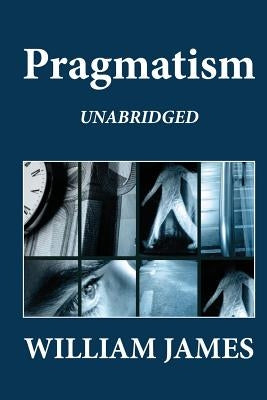
Pragmatism, by William James, has wielded an immense influence on modern thought on the rise of science and capitalism in America. In this classic book, James challenges philosophers of all classes to provide a net value to their systems; that is, how do they affect human life or make the world better or worse? James insists that no philosophy finally matters unless it impacts life in concrete terms. To lock down his philosophy he fashions a new model of truth, stating that whatever is beneficial is true. There are huge problems here, such as the rise of the subjective. James doesn't specify to whom truth should be beneficial (humanity in general? Subjective selves?), so his theory leads to strange quandaries. It would be "true" for a sound-minded criminal on trial to plead insanity, and it would also be "true" for the prosecutor to charge guilt and sanity. Obviously, confusing "useful" and "true" is a category obfuscation. As well, morality would suffer on this view. If lying is useful then regarding lies as truths is fully permissible according to James's line of thought. Nonetheless, Pragmatism is an important read simply because so much of today's world is run in terms of the useful rather than the ideal or intrinsically good. That is why art is marginalized, morality compromised, and capital generating systems glorified. James's Pragmatism is extremely useful in helping us to understand ourselves-and modern thinking-today.

Author: William James
Publisher: Createspace Independent Publishing Platform
Published: 09/02/2012
Pages: 108
Binding Type: Paperback
Weight: 0.34lbs
Size: 9.02h x 5.98w x 0.22d
ISBN13: 9781479246021
ISBN10: 1479246026
BISAC Categories:
- Philosophy | General

About the Author
William James (1842 -1910) was a pioneering American psychologist and philosopher who was trained as a physician. He wrote influential books on the young science of psychology, educational psychology, psychology of religious experience and mysticism, and on the philosophy of pragmatism. He was the brother of novelist Henry James and of diarist Alice James. William James was born at the Astor House in New York City. He was the son of Henry James Sr., an independently wealthy and notoriously eccentric Swedenborgian theologian well acquainted with the literary and intellectual elites of his day. The intellectual brilliance of the James family milieu and the remarkable epistolary talents of several of its members have made them a subject of continuing interest to historians, biographers, and critics. James interacted with a wide array of writers and scholars throughout his life, including his godfather Ralph Waldo Emerson, his godson William James Sidis, as well as Charles Sanders Peirce, Bertrand Russell, Josiah Royce, Ernst Mach, John Dewey, Walter Lippmann, Mark Twain, Horatio Alger, Jr., Henri Bergson and Sigmund Freud.

This title is not returnable