
Facility Verification
Please verify the inmate's facility before purchasing.
OR
This Publication is Restricted at this Facility.

Description
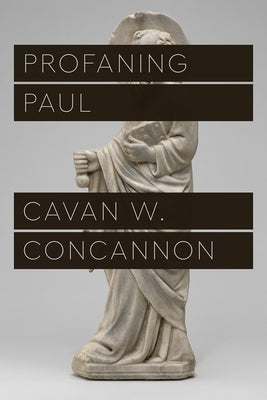
A critical reconsideration of the repeated use of the biblical letters of Paul. The letters of Paul have been used to support and condone a host of evils over the span of more than two millennia: racism, slavery, imperialism, misogyny, and anti-Semitism, to name a few. Despite, or in some cases because of, this history, readers of Paul have felt compelled to reappropriate his letters to fit liberal or radical politics, seeking to set right the evils done in Paul's name. Starting with the language of excrement, refuse, and waste in Paul's letters, Profaning Paul looks at how Paul's "shit" is recycled and reconfigured. It asks why readers, from liberal Christians to academic biblical scholars to political theorists and philosophers, feel compelled to make Paul into a hero, mining his words for wisdom. Following the lead of feminist, queer, and minoritized scholarship, Profaning Paul asks what would happen if we stopped recycling Paul's writings. By profaning the status of his letters as sacred texts, we might open up new avenues for imagining political figurations to meet our current and coming political, economic, and ecological challenges.
Author: Cavan W. Concannon
Publisher: University of Chicago Press
Published: 12/10/2021
Pages: 192
Binding Type: Paperback
Weight: 0.59lbs
Size: 9.00h x 6.00w x 0.41d
ISBN13: 9780226815657
ISBN10: 022681565X
BISAC Categories:
- Religion | Biblical Commentary | New Testament | Paul's Letters
- Religion | Biblical Studies | New Testament | Paul's Letters
- Religion | Biblical Criticism & Interpretation | New Testament
Author: Cavan W. Concannon
Publisher: University of Chicago Press
Published: 12/10/2021
Pages: 192
Binding Type: Paperback
Weight: 0.59lbs
Size: 9.00h x 6.00w x 0.41d
ISBN13: 9780226815657
ISBN10: 022681565X
BISAC Categories:
- Religion | Biblical Commentary | New Testament | Paul's Letters
- Religion | Biblical Studies | New Testament | Paul's Letters
- Religion | Biblical Criticism & Interpretation | New Testament
About the Author
Cavan Concannon is associate professor of religion at the University of Southern California. He is the author of Assembling Early Christianity: Trade, Networks, and the Letters of Dionysios of Corinth and "When You Were Gentiles" Specters of Ethnicity in Roman Corinth and Paul's Corinthian Correspondence. He is codirector of the Mediterranean Connectivity Initiative and has excavated at Corinth and Ostia Antica.