
Facility Verification
Please verify the inmate's facility before purchasing.
This Publication is Restricted at this Facility.

Description
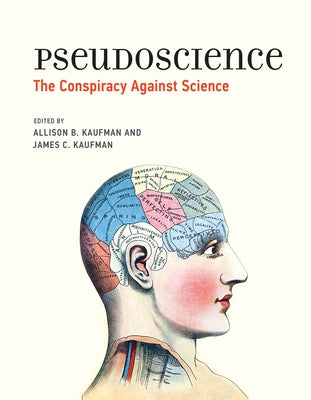
In a post-truth, fake news world, we are particularly susceptible to the claims of pseudoscience. When emotions and opinions are more widely disseminated than scientific findings, and self-proclaimed experts get their expertise from Google, how can the average person distinguish real science from fake? This book examines pseudoscience from a variety of perspectives, through case studies, analysis, and personal accounts that show how to recognize pseudoscience, why it is so widely accepted, and how to advocate for real science.
Contributors examine the basics of pseudoscience, including issues of cognitive bias; the costs of pseudoscience, with accounts of naturopathy and logical fallacies in the anti-vaccination movement; perceptions of scientific soundness; the mainstream presence of "integrative medicine," hypnosis, and parapsychology; and the use of case studies and new media in science advocacy.
Contributors
David Ball, Paul Joseph Barnett, Jeffrey Beall, Mark Benisz, Fernando Blanco, Ron Dumont, Stacy Ellenberg, Kevin M. Folta, Christopher French, Ashwin Gautam, Dennis M. Gorman, David H. Gorski, David K. Hecht, Britt Marie Hermes, Clyde F. Herreid, Jonathan Howard, Seth C. Kalichman, Leif Edward Ottesen Kennair, Arnold Kozak, Scott O. Lilienfeld, Emilio Lobato, Steven Lynn, Adam Marcus, Helena Matute, Ivan Oransky, Chad Orzel, Dorit Reiss, Ellen Beate Hansen Sandseter, Kavin Senapathy, Dean Keith Simonton, Indre Viskontas, John O. Willis, Corrine Zimmerman
Author: Allison B. Kaufman
Publisher: MIT Press
Published: 03/12/2019
Pages: 536
Binding Type: Paperback
Weight: 1.70lbs
Size: 8.70h x 6.60w x 1.00d
ISBN13: 9780262537049
ISBN10: 0262537044
BISAC Categories:
- Science | Philosophy & Social Aspects
- Psychology | General
- Science | Study & Teaching
About the Author
Allison B. Kaufman is Research Scientist in the Department of Ecology and Evolutionary Biology at the University of Connecticut, where she is also Adjunct Professor in the Department of Psychology.