
Facility Verification
Please verify the inmate's facility before purchasing.
OR
This Publication is Restricted at this Facility.

Description
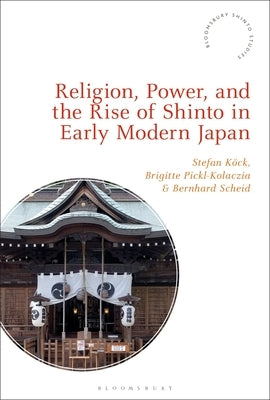
This book sheds new light on the relationship between religion and state in early modern Japan, and demonstrates the growing awareness of Shinto in both the political and the intellectual elite of Tokugawa Japan, even though Buddhism remained the privileged means of stately religious control.
The first part analyses how the Tokugawa government aimed to control the populace via Buddhism and at the same time submitted Buddhism to the sacralization of the Tokugawa dynasty. The second part focuses on the religious protests throughout the entire period, with chapters on the suppression of Christians, heterodox Buddhist sects, and unwanted folk practitioners. The third part tackles the question of why early Tokugawa Confucianism was particularly interested in "Shinto" as an alternative to Buddhism and what "Shinto" actually meant from a Confucian stance.
The final part of the book explores attempts to curtail the institutional power of Buddhism by reforming Shinto shrines, an important step in the so called "Shintoization of shrines" including the development of a self-contained Shinto clergy.
Author: Stefan Köck
Publisher: Bloomsbury Publishing PLC
Published: 11/17/2022
Pages: 304
Binding Type: Paperback
Weight: 0.93lbs
Size: 9.21h x 6.14w x 0.63d
ISBN13: 9781350231863
ISBN10: 135023186X
BISAC Categories:
- Religion | Shintoism
- Political Science | World | Asian
The first part analyses how the Tokugawa government aimed to control the populace via Buddhism and at the same time submitted Buddhism to the sacralization of the Tokugawa dynasty. The second part focuses on the religious protests throughout the entire period, with chapters on the suppression of Christians, heterodox Buddhist sects, and unwanted folk practitioners. The third part tackles the question of why early Tokugawa Confucianism was particularly interested in "Shinto" as an alternative to Buddhism and what "Shinto" actually meant from a Confucian stance.
The final part of the book explores attempts to curtail the institutional power of Buddhism by reforming Shinto shrines, an important step in the so called "Shintoization of shrines" including the development of a self-contained Shinto clergy.
Author: Stefan Köck
Publisher: Bloomsbury Publishing PLC
Published: 11/17/2022
Pages: 304
Binding Type: Paperback
Weight: 0.93lbs
Size: 9.21h x 6.14w x 0.63d
ISBN13: 9781350231863
ISBN10: 135023186X
BISAC Categories:
- Religion | Shintoism
- Political Science | World | Asian
About the Author
Stefan Köck is a postdoctoral research fellow at the Austrian Academy of Sciences, Austria.
Brigitte Pickl-Kolaczia is a doctoral candidate at Austrian Academy of Sciences, Austria.
Bernhard Scheid is a senior researcher at the Austrian Academy of Sciences, Austria.