

Description
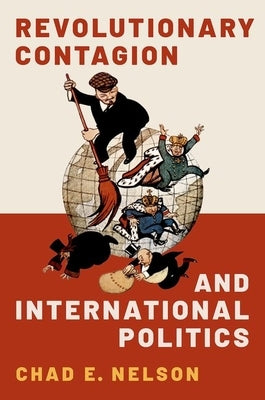
A unique theory of what happens when leaders fear a revolution abroad will spread to their own country and how that affects international relations. When do leaders fear that a revolution elsewhere will spread to their own polities, and what are the international effects of this fear? In Revolutionary Contagion, Chad E. Nelson develops and tests a theory that explains how states react to ideological-driven revolutions that have occurred in other nations. To do this, he analyzes four key revolutionary movements over two centuries-liberalism, communism, fascism, and Islamism. He further explains that the key to understanding the response to revolutions lies in focusing on the extent to which leaders fear upheaval in their own countries. According to the theory, Nelson argues, fear of contagion is driven more by the characteristics of the host rather than the activities of the infecting agents. In other words, leaders will fear revolutionary contagion when they have significant revolutionary opposition movements that have an ideological affinity with the revolutionary state. A powerful theory of the profound effects revolutions have on international relations, this book shows why one simply cannot make sense of international politics--including patterns of alliances and wars--in certain situations without considering the fear of contagion.
Author: Chad E. Nelson
Publisher: Oxford University Press, USA
Published: 08/19/2022
Pages: 288
Binding Type: Paperback
Weight: 0.96lbs
Size: 9.23h x 6.08w x 0.62d
ISBN13: 9780197601938
ISBN10: 0197601936
BISAC Categories:
- Political Science | International Relations | General
- Political Science | Comparative Politics
- Political Science | History & Theory | General
Author: Chad E. Nelson
Publisher: Oxford University Press, USA
Published: 08/19/2022
Pages: 288
Binding Type: Paperback
Weight: 0.96lbs
Size: 9.23h x 6.08w x 0.62d
ISBN13: 9780197601938
ISBN10: 0197601936
BISAC Categories:
- Political Science | International Relations | General
- Political Science | Comparative Politics
- Political Science | History & Theory | General
About the Author
Chad E. Nelson is an Assistant Professor of Political Science at Brigham Young University. His research interests include the international effects of revolutions, ideology and international politics, and the rise of great powers.
CUSTOMER REVIEWS
Write A Review