
Facility Verification
Please verify the inmate's facility before purchasing.
OR
This Publication is Restricted at this Facility.

Description
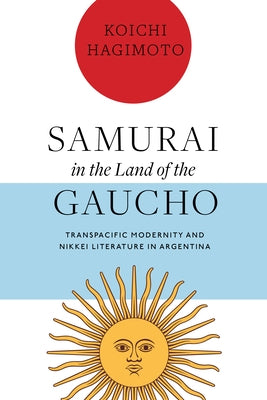
In the early twentieth century, historical imaginings of Japan contributed to the Argentine vision of "transpacific modernity." Intellectuals such as Eduardo Wilde and Manuel Domecq García celebrated Japanese customs and traditions as important values that can be integrated into Argentine society. But a new generation of Nikkei or Japanese Argentines is rewriting this conventional narrative in the twenty-first century. Nikkei writers such as Maximiliano Matayoshi and Alejandra Kamiya are challenging the earlier, unapologetic view of Japan based on their own immigrant experiences. Compared to the experience of political persecution against Japanese immigrants in Brazil and Peru, the Japanese in Argentina generally lived under a more agreeable sociopolitical climate. In order to understand the "positive" perception of Japan in Argentine history and literature, Samurai in the Land of the Gaucho turns to the current debate on race in Argentina, particularly as it relates to the discourse of whiteness. One of the central arguments is that Argentina's century-old interest in Japan represents a disguised method of (re)claiming its white, Western identity. Through close readings of diverse genres (travel writing, essay, novel, short story, and film) Samurai in the Land of the Gaucho yields a multi-layered analysis in order to underline the role Japan has played in both defining and defying Argentine modernity from the twentieth century to the present.
Author: Koichi Hagimoto
Publisher: Vanderbilt University Press
Published: 07/15/2023
Pages: 188
Binding Type: Paperback
Weight: 0.62lbs
Size: 9.00h x 6.00w x 0.43d
ISBN13: 9780826505699
ISBN10: 0826505694
BISAC Categories:
- History | Latin America | South America
- Social Science | Emigration & Immigration
- Literary Criticism | Caribbean & Latin American
Author: Koichi Hagimoto
Publisher: Vanderbilt University Press
Published: 07/15/2023
Pages: 188
Binding Type: Paperback
Weight: 0.62lbs
Size: 9.00h x 6.00w x 0.43d
ISBN13: 9780826505699
ISBN10: 0826505694
BISAC Categories:
- History | Latin America | South America
- Social Science | Emigration & Immigration
- Literary Criticism | Caribbean & Latin American
About the Author
Koichi Hagimoto is an associate professor of Spanish at Wellesley College.