
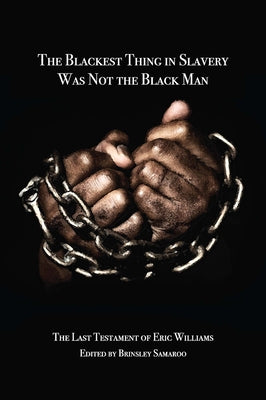

Description
The
Blackest Thing in Slavery Was Not the Black Man: The Last Testament of Eric
Williams represents the final instalment of research and
analysis by one of the Caribbean's foremost historians. In this volume, Eric
Williams reflects on the institution of slavery from the ancient period in
Europe down to New World African slavery and considers, too, other forms of
bondage that followed slavery, including of Japanese, Chinese, Indians and
Pacific peoples in many locations worldwide. Williams points ways in which this
bondage led to European and American prosperity and the manner in which bonded
peoples created their own spaces. This they did through the preservation and
revival of the transported culture to the new locations. The
Blackest Thing in Slavery makes a significant contribution in
that it moves beyond African slavery. It continues the narrative after
abolition by showing how the capitalist impulse enabled Europe and the United
States to devise other (non-slavery) ways of further exploiting of non-African
people in developing countries. These nations fought this further exploitation
in banding together to create the south-to-south nonaligned movement, which
gave mutual assistance in a number of areas. Most other works tend to separate
these issues or deal with them on a regional basis. Eric Williams offers a
comprehensive view, tying together many themes in a vast compendium.
Author: Brinsley Samaroo
Publisher: University of the West Indies Press
Published: 06/01/2022
Pages: 256
Binding Type: Paperback
Weight: 0.81lbs
Size: 9.00h x 6.00w x 0.56d
ISBN13: 9789766407476
ISBN10: 9766407479
BISAC Categories:
- History | Caribbean & West Indies | Cuba
- History | Europe | General
- Political Science | Political Ideologies | Capitalism
Blackest Thing in Slavery Was Not the Black Man: The Last Testament of Eric
Williams represents the final instalment of research and
analysis by one of the Caribbean's foremost historians. In this volume, Eric
Williams reflects on the institution of slavery from the ancient period in
Europe down to New World African slavery and considers, too, other forms of
bondage that followed slavery, including of Japanese, Chinese, Indians and
Pacific peoples in many locations worldwide. Williams points ways in which this
bondage led to European and American prosperity and the manner in which bonded
peoples created their own spaces. This they did through the preservation and
revival of the transported culture to the new locations. The
Blackest Thing in Slavery makes a significant contribution in
that it moves beyond African slavery. It continues the narrative after
abolition by showing how the capitalist impulse enabled Europe and the United
States to devise other (non-slavery) ways of further exploiting of non-African
people in developing countries. These nations fought this further exploitation
in banding together to create the south-to-south nonaligned movement, which
gave mutual assistance in a number of areas. Most other works tend to separate
these issues or deal with them on a regional basis. Eric Williams offers a
comprehensive view, tying together many themes in a vast compendium.
Author: Brinsley Samaroo
Publisher: University of the West Indies Press
Published: 06/01/2022
Pages: 256
Binding Type: Paperback
Weight: 0.81lbs
Size: 9.00h x 6.00w x 0.56d
ISBN13: 9789766407476
ISBN10: 9766407479
BISAC Categories:
- History | Caribbean & West Indies | Cuba
- History | Europe | General
- Political Science | Political Ideologies | Capitalism
CUSTOMER REVIEWS
Write A Review