
Facility Verification
Please verify the inmate's facility before purchasing.
OR
This Publication is Restricted at this Facility.

Description
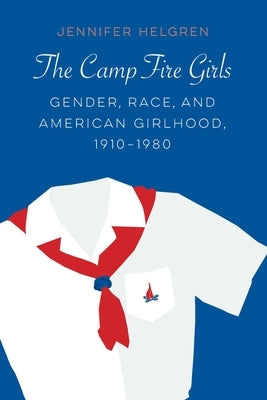
As the twentieth century dawned, progressive educators established a national organization for adolescent girls to combat what they believed to be a crisis of girls' education. A corollary to the Boy Scouts of America, founded just a few years earlier, the Camp Fire Girls became America's first and, for two decades, most popular girls' organization. Based on Protestant middle-class ideals--a regulatory model that reinforced hygiene, habit formation, hard work, and the idea that women related to the nation through service--the Camp Fire Girls invented new concepts of American girlhood by inviting disabled girls, Black girls, immigrants, and Native Americans to join. Though this often meant a false sense of cultural universality, in the girls' own hands membership was often profoundly empowering and provided marginalized girls spaces to explore the meaning of their own cultures in relation to changes taking place in twentieth-century America. Through the lens of the Camp Fire Girls, Jennifer Helgren traces the changing meanings of girls' citizenship in the cultural context of the twentieth century. Drawing on girls' scrapbooks, photographs, letters, and oral history interviews, in addition to adult voices in organization publications and speeches, The Camp Fire Girls explores critical intersections of gender, race, class, nation, and disability.
Author: Jennifer Helgren
Publisher: University of Nebraska Press
Published: 12/01/2022
Pages: 372
Binding Type: Paperback
Weight: 1.20lbs
Size: 9.00h x 6.00w x 0.83d
ISBN13: 9781496233080
ISBN10: 1496233085
BISAC Categories:
- Social Science | Children's Studies
- Social Science | Gender Studies
- History | United States | 20th Century
Author: Jennifer Helgren
Publisher: University of Nebraska Press
Published: 12/01/2022
Pages: 372
Binding Type: Paperback
Weight: 1.20lbs
Size: 9.00h x 6.00w x 0.83d
ISBN13: 9781496233080
ISBN10: 1496233085
BISAC Categories:
- Social Science | Children's Studies
- Social Science | Gender Studies
- History | United States | 20th Century
About the Author
Jennifer Helgren is a professor of history at the University of the Pacific in Stockton, California. She is the author of American Girls and Global Responsibility: A New Relation to the World during the Early Cold War.