
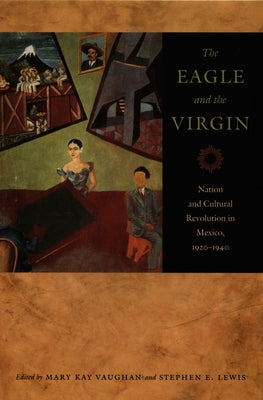

Description
Contributors explore the nation-building efforts of the government, artists, entrepreneurs, and social movements; their contradictory, often conflicting intersection; and their inevitably transnational nature. Scholars of political and social history, communications, and art history describe the creation of national symbols, myths, histories, and heroes to inspire patriotism and transform workers and peasants into efficient, productive, gendered subjects. They analyze the aesthetics of nation building made visible in murals, music, and architecture; investigate state projects to promote health, anticlericalism, and education; and consider the role of mass communications, such as cinema and radio, and the impact of road building. They discuss how national identity was forged among social groups, specifically political Catholics, industrial workers, middle-class women, and indigenous communities. Most important, the volume weighs in on debates about the tension between the eagle (the modernizing secular state) and the Virgin of Guadalupe (the Catholic defense of faith and morality). It argues that despite bitter, violent conflict, the symbolic repertoire created to promote national identity and memory making eventually proved capacious enough to allow the eagle and the virgin to coexist peacefully.
Contributors. Adrian Bantjes, Katherine Bliss, María Teresa Fernández, Joy Elizabeth Hayes, Joanne Hershfield, Stephen E. Lewis, Claudio Lomnitz, Rick A. López, Sarah M. Lowe, Jean Meyer, James Oles, Patrice Olsen, Desmond Rochfort, Michael Snodgrass, Mary Kay Vaughan, Marco Velázquez, Wendy Waters, Adriana Zavala
Author: Mary Kay Vaughan
Publisher: Duke University Press
Published: 03/13/2006
Pages: 396
Binding Type: Paperback
Weight: 1.28lbs
Size: 9.24h x 6.22w x 1.00d
ISBN13: 9780822336686
ISBN10: 0822336685
BISAC Categories:
- History | Latin America | Mexico
About the Author
Mary Kay Vaughan is Professor of History at the University of Maryland, College Park. Her books include Cultural Politics in Revolution: Teachers, Peasants, and Schools in Mexico, 1930-1940. She is a coeditor of the journal Hispanic American Historical Review.
Stephen E. Lewis is Associate Professor of History at California State University, Chico. He is the author of The Ambivalent Revolution: Forging State and Nation in Chiapas, 1910-1945.