
Facility Verification
Please verify the inmate's facility before purchasing.
OR
This Publication is Restricted at this Facility.

Description
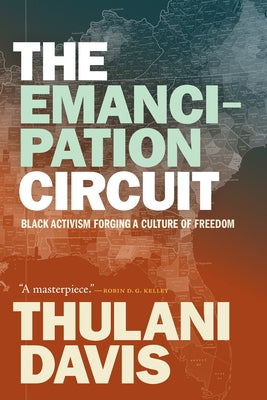
In The Emancipation Circuit Thulani Davis provides a sweeping rethinking of Reconstruction by tracing how the four million people newly freed from bondage created political organizations and connections that mobilized communities across the South. Drawing on the practices of community they developed while enslaved, freedpeople built new settlements and created a network of circuits through which they imagined, enacted, and defended freedom. This interdisciplinary history shows that these circuits linked rural and urban organizations, labor struggles, and political culture with news, strategies, education, and mutual aid. Mapping the emancipation circuits, Davis shows the geography of ideas of freedom---circulating on shipping routes, via army maneuvers, and with itinerant activists---that became the basis for the first mass Black political movement for equal citizenship in the United States. In this work, she reconfigures understandings of the evolution of southern Black political agendas while outlining the origins of the enduring Black freedom struggle from the Jim Crow era to the present.
Author: Thulani Davis
Publisher: Duke University Press
Published: 06/30/2022
Pages: 464
Binding Type: Paperback
Weight: 1.41lbs
Size: 9.00h x 6.00w x 0.97d
ISBN13: 9781478018193
ISBN10: 1478018194
BISAC Categories:
- History | African American & Black
- History | United States | Civil War Period (1850-1877)
- History | United States | State & Local | South (AL,AR,FL,GA,KY,LA,MS,
Author: Thulani Davis
Publisher: Duke University Press
Published: 06/30/2022
Pages: 464
Binding Type: Paperback
Weight: 1.41lbs
Size: 9.00h x 6.00w x 0.97d
ISBN13: 9781478018193
ISBN10: 1478018194
BISAC Categories:
- History | African American & Black
- History | United States | Civil War Period (1850-1877)
- History | United States | State & Local | South (AL,AR,FL,GA,KY,LA,MS,
About the Author
Thulani Davis is a professor and a Nellie Y. McKay Fellow in the Afro-American Studies Department at the University of Wisconsin-Madison and author of My Confederate Kinfolk: A Twenty-first Century Freedwoman Discovers Her Roots. A poet and longtime writer for theater, film, and journalism, Davis has been a recipient of a Lila Wallace-Readers Digest Writers Award, a PEW Foundation National Theatre Artist Residency, and a Charles H. Revson Fellowship on the Future of New York City.