
Facility Verification
Please verify the inmate's facility before purchasing.
OR
This Publication is Restricted at this Facility.
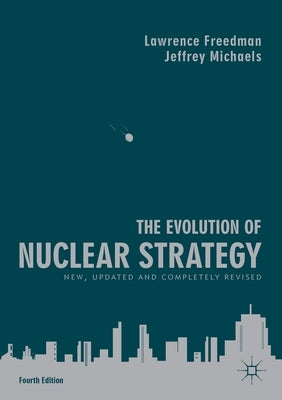

Description
Preface
Introduction1. The Arrival of the Bomb2. The Strategy of Hiroshima3. Offence and Defence 4. Aggression and Retaliation5. Strategy for an Atomic Monopoly6. Strategy for an Atomic Stalemate7. Massive Retaliation8. Limited Objectives9. Limited Means10. The Importance of Being First11. Sputnik and the Soviet Threat12. Soviet Strategy after Stalin13. The Technological Arms Race14. New Sources of Strategy15. The Strategy of Stable Conflict16. Disarmament to Arms Control17. Operational Nuclear Strategy18. Khrushchev's Second-Best Deterrent19. Defending Europe20. No Cities21. Assured Destruction22. Britain's 'Independent' Nuclear Deterrent23. France and the Credibility of Nuclear Guarantees24. A NATO Nuclear Force25. The Unthinkable Weapon26. China's Paper Tiger27. The Soviet Approach to Deterrence28. The McNamara Legacy29. Salt, Parity and the Critique Of Mad30. Actions and Reactions31. Selective Options32. ICBM Vulnerability33. The Rise of Anti-Nuclear Protest34. Strategic Defences35. Soviet Doctrine from Brezhnev to Gorbachev36. The End of the Cold War37. Mutual Assured Safety38. Elimination or Marginalization39. The Second Nuclear Age40. The Nuclear War on Terror41. Proliferation: The Middle East and the Pacific42. The Return of Great Power Politics 43. Primacy and Maximum Deterrence44. Can There Be A Nuclear Strategy?
Author: Lawrence Freedman, Jeffrey Michaels
Publisher: Palgrave MacMillan
Published: 08/22/2019
Pages: 786
Binding Type: Paperback
Weight: 2.08lbs
Size: 8.27h x 5.83w x 1.60d
ISBN13: 9781137573490
ISBN10: 113757349X
BISAC Categories:
- Political Science | Security (National & International)
- Political Science | Peace
- Political Science | International Relations | General
Introduction1. The Arrival of the Bomb2. The Strategy of Hiroshima3. Offence and Defence 4. Aggression and Retaliation5. Strategy for an Atomic Monopoly6. Strategy for an Atomic Stalemate7. Massive Retaliation8. Limited Objectives9. Limited Means10. The Importance of Being First11. Sputnik and the Soviet Threat12. Soviet Strategy after Stalin13. The Technological Arms Race14. New Sources of Strategy15. The Strategy of Stable Conflict16. Disarmament to Arms Control17. Operational Nuclear Strategy18. Khrushchev's Second-Best Deterrent19. Defending Europe20. No Cities21. Assured Destruction22. Britain's 'Independent' Nuclear Deterrent23. France and the Credibility of Nuclear Guarantees24. A NATO Nuclear Force25. The Unthinkable Weapon26. China's Paper Tiger27. The Soviet Approach to Deterrence28. The McNamara Legacy29. Salt, Parity and the Critique Of Mad30. Actions and Reactions31. Selective Options32. ICBM Vulnerability33. The Rise of Anti-Nuclear Protest34. Strategic Defences35. Soviet Doctrine from Brezhnev to Gorbachev36. The End of the Cold War37. Mutual Assured Safety38. Elimination or Marginalization39. The Second Nuclear Age40. The Nuclear War on Terror41. Proliferation: The Middle East and the Pacific42. The Return of Great Power Politics 43. Primacy and Maximum Deterrence44. Can There Be A Nuclear Strategy?
Author: Lawrence Freedman, Jeffrey Michaels
Publisher: Palgrave MacMillan
Published: 08/22/2019
Pages: 786
Binding Type: Paperback
Weight: 2.08lbs
Size: 8.27h x 5.83w x 1.60d
ISBN13: 9781137573490
ISBN10: 113757349X
BISAC Categories:
- Political Science | Security (National & International)
- Political Science | Peace
- Political Science | International Relations | General
About the Author
Lawrence Freedman is Emeritus Professor of War Studies at King's College London, UK. He was appointed Official Historian of the Falklands Campaign in 1997 and was a member of the official inquiry into Britain and the 2003 Iraq War. His most recent books include Strategy: A History (2015) and The Future of War: A History (2017).
Jeffrey Michaels is Senior Lecturer in Defence Studies at King's College London, UK