
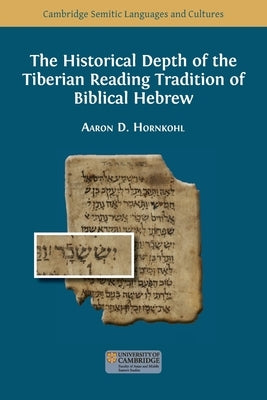

Description
This volume explores an underappreciated feature of the standard Tiberian Masoretic tradition of the Hebrew Bible, namely its composite nature. Focusing on cases of dissonance between the tradition's written (consonantal) and reading (vocalic) components, the study shows that, though related, interdependent, and largely in harmony, the Tiberian spelling and pronunciation traditions at numerous points reflect distinct oral realisations of the biblical text.
Where the extant vocalisation differs from the apparently pre-exilic pronunciation presupposed by the written tradition, the former often exhibits conspicuous affinity with post-exilic linguistic conventions as seen in representative Second Temple material, such as the core Late Biblical Hebrew books, the Dead Sea Scrolls, Ben Sira, rabbinic literature, the Samaritan Pentateuch, and contemporary Aramaic and Syriac material. On the one hand, such instances of written-reading disharmony clearly entail a degree of anachronism in the vocalisation of Classical Biblical Hebrew compositions. On the other, since many of the innovative and secondary features in the Tiberian vocalisation tradition are typical of sources from the Second Temple Period and, in some cases, are documented as minority alternatives in even earlier material, the Masoretic reading tradition is justifiably characterised as a linguistic artefact of profound historical depth.
Author: Aaron D. Hornkohl
Publisher: Open Book Publishers
Published: 01/17/2023
Pages: 558
Binding Type: Paperback
Weight: 1.70lbs
Size: 9.21h x 6.14w x 1.52d
ISBN13: 9781800649804
ISBN10: 1800649800
BISAC Categories:
- Religion | Biblical Biography | General
- Religion | Biblical Studies | History & Culture
This title is not returnable