

Description
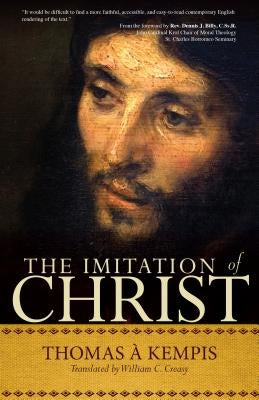
"What would Jesus do?" That's the primary question Thomas Kempis answers in his universally acclaimed work, The Imitation of Christ. In 114 short chapters organized into four simple parts, this handbook on the spiritual life offers guidance on dozens of topics such as resisting temptation, avoiding hasty judgments, putting up with others' faults, remembering God's many blessings, self-surrender, minding our own business, and performing humble works. William Creasy succeeds in creating a dramatically different interpretation of The Imitation of Christ by working through its historical, cultural, and linguistic contexts. This book inspired the likes of St. Thomas More, St. Ignatius of Loyola, Th r se of Lisieux, Dorothy Day, and Thomas Merton. Along with such classics as Augustine's Confessions, Teresa of Avila's Interior Castle, and Ignatius's Spiritual Exercises, The Imitation of Christ continues to confront each generation of readers with the perennial truths of the Gospel.
Author: Thomas A'Kempis
Publisher: Ave Maria Press
Published: 01/31/2004
Pages: 194
Binding Type: Paperback
Weight: 0.70lbs
Size: 8.40h x 5.40w x 0.50d
ISBN13: 9780870612312
ISBN10: 087061231X
BISAC Categories:
- Religion | Christian Theology | General
- Religion | Christianity | Literature & the Arts
- Religion | Spirituality
Binding Material: Paper
Author: Thomas A'Kempis
Publisher: Ave Maria Press
Published: 01/31/2004
Pages: 194
Binding Type: Paperback
Weight: 0.70lbs
Size: 8.40h x 5.40w x 0.50d
ISBN13: 9780870612312
ISBN10: 087061231X
BISAC Categories:
- Religion | Christian Theology | General
- Religion | Christianity | Literature & the Arts
- Religion | Spirituality
Binding Material: Paper
About the Author
Thomas à Kempis (1380-1471) was a medieval Dutch monk steeped in the mystical tradition of his time. A member of the Brothers of the Common Life, he was ordained a priest in 1413. His well-loved work, The Imitation of Christ, was written between 1420 and 1427 presumably as four booklets intended to instruct the novices of his community. It is one of Christian history's best-known works on spiritual devotion. This small book sidesteps academic pretension to consider larger truths. "A poor peasant who serves God," Thomas wrote, "is better than a proud philosopher who . . . ponders the courses of the stars."