
Facility Verification
Please verify the inmate's facility before purchasing.
OR
This Publication is Restricted at this Facility.

Description
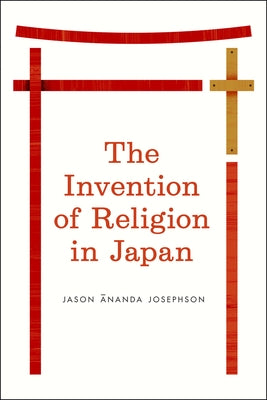
Throughout its long history, Japan had no concept of what we call "religion." There was no corresponding Japanese word, nor anything close to its meaning. But when American warships appeared off the coast of Japan in 1853 and forced the Japanese government to sign treaties demanding, among other things, freedom of religion, the country had to contend with this Western idea. In this book, Jason Ananda Josephson reveals how Japanese officials invented religion in Japan and traces the sweeping intellectual, legal, and cultural changes that followed. More than a tale of oppression or hegemony, Josephson's account demonstrates that the process of articulating religion offered the Japanese state a valuable opportunity. In addition to carving out space for belief in Christianity and certain forms of Buddhism, Japanese officials excluded Shinto from the category. Instead, they enshrined it as a national ideology while relegating the popular practices of indigenous shamans and female mediums to the category of "superstitions"-and thus beyond the sphere of tolerance. Josephson argues that the invention of religion in Japan was a politically charged, boundary-drawing exercise that not only extensively reclassified the inherited materials of Buddhism, Confucianism, and Shinto to lasting effect, but also reshaped, in subtle but significant ways, our own formulation of the concept of religion today. This ambitious and wide-ranging book contributes an important perspective to broader debates on the nature of religion, the secular, science, and superstition.
Author: Jason Ananda Josephson Storm
Publisher: University of Chicago Press
Published: 10/03/2012
Pages: 408
Binding Type: Paperback
Weight: 1.05lbs
Size: 8.80h x 6.00w x 0.90d
ISBN13: 9780226412344
ISBN10: 0226412342
BISAC Categories:
- History | Asia | Japan
- Religion | History
- Religion | Shintoism
Author: Jason Ananda Josephson Storm
Publisher: University of Chicago Press
Published: 10/03/2012
Pages: 408
Binding Type: Paperback
Weight: 1.05lbs
Size: 8.80h x 6.00w x 0.90d
ISBN13: 9780226412344
ISBN10: 0226412342
BISAC Categories:
- History | Asia | Japan
- Religion | History
- Religion | Shintoism
About the Author
Jason Ananda Josephson is associate professor in and chair of the Department of Religion at Williams College. He is the author of The Myth of Disenchantment: Magic, Modernity, and the Birth of the Human Sciences, also published by the University of Chicago Press.