
Facility Verification
Please verify the inmate's facility before purchasing.
This Publication is Restricted at this Facility.
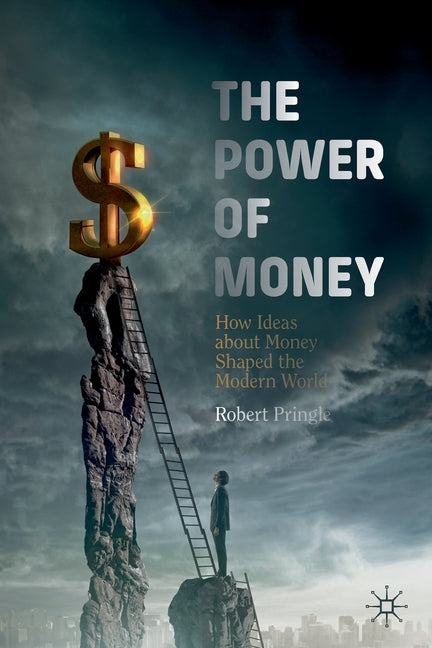

Description
1. Introduction
Part One: Time Past: How ideas shaped actions
2. Europe's money and culture before 1914
3. The 1920s: Lessons from Weimar
4. The Jazz Age: America in the 1920s
5. The money-haters: experiments in socialism
6. Europe between the world wars: a ferment of ideas
7. How Europe's culture kept money under control (1940s and 1950s)
8. New money from the New World
9. American culture and the dollar after World War II
10. The century's hinge (mid 1960s to late 1970s)
11. 1980-2000: Creation of a global money space
Part Two: Time Present: Actions have consequences
12. The global money culture - an outline
13. Money Delusion and the crash, 2000-2010
14. Money as a tool of the state
15. The euro: the biggest money project
16. Crony and criminal capitalism since 2010
17. Global money: Insiders and Outsiders
Part Three: Time Future: Consequences engender ideas
18. The jealous state and the future of money
19. The new sociology of money
20. Money and the decline of classical liberalism
21. What can we learn from Japanese culture?
22. Contemporary art: towards new ways of 'seeing' money
Part Four: Concluding remarks
23. The money we deserve
Author: Robert Pringle
Publisher: Palgrave MacMillan
Published: 12/11/2019
Pages: 300
Binding Type: Paperback
Weight: 0.97lbs
Size: 9.21h x 6.14w x 0.65d
ISBN13: 9783030258931
ISBN10: 3030258939
BISAC Categories:
- Business & Economics | Finance | General
- Business & Economics | Economic History
- Business & Economics | Economics | Macroeconomics
About the Author
Robert Pringle is an author, editor, commentator and entrepreneur specializing in money, banking and capital markets. A former Editor of The Banker, London, he was founding director of the Group of 30 institute on monetary affairs (now based in Washington, DC) from 1979 to 1986. In 1990 he founded Central Banking Publications, a financial publisher specialising in public policy and financial markets including the Central Banking journal, which he edited for 20 years. He remains chairman of the company. Robert has monitored and commented on changes in financial markets and the monetary policies of central banks around the world for more than 40 years. In addition to numerous articles for a wide variety of journals, he has published several books and edited more than 50 volumes of collected papers, surveys and training manuals for central bankers and market regulators. He has obtained a Master's degree in economics, sociology and history from King's College, Cambridge University, UK, and conducted post-graduate study in economics and sociology at the London School of Economics, UK.