
Facility Verification
Please verify the inmate's facility before purchasing.
This Publication is Restricted at this Facility.
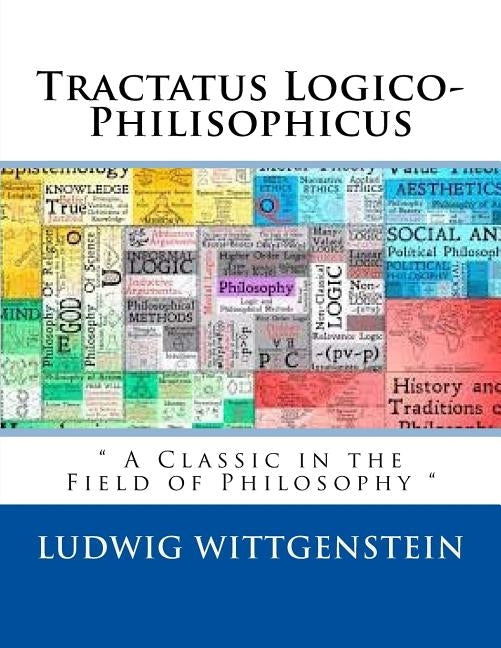

Description
Author: Bertrand Russell F. R. S., Ludwig Wittgenstein
Publisher: Createspace Independent Publishing Platform
Published: 03/15/1921
Pages: 164
Binding Type: Paperback
Weight: 0.87lbs
Size: 11.00h x 8.50w x 0.35d
ISBN13: 9781986743280
ISBN10: 1986743284
BISAC Categories:
- Non-Classifiable | Non-Classifiable
- Philosophy | Logic
- Philosophy | History & Surveys | Modern
About the Author
Ludwig Josef Johann Wittgenstein (26 April 1889 - 29 April 1951) was an Austrian-British philosopher who worked primarily in logic, the philosophy of mathematics, the philosophy of mind, and the philosophy of language. From 1929 to 1947, Wittgenstein taught at the University of Cambridge. During his lifetime he published just one slim book, the 75-page Tractatus Logico-Philosophicus (1921), one article, one book review and a children's dictionary. His voluminous manuscripts were edited and published posthumously. Philosophical Investigations appeared as a book in 1953, and has since come to be recognized as one of the most important works of philosophy in the twentieth century. His teacher, Bertrand Russell, described Wittgenstein as "the most perfect example I have ever known of genius as traditionally conceived; passionate, profound, intense, and dominating"
This title is not returnable