
Facility Verification
Please verify the inmate's facility before purchasing.
This Publication is Restricted at this Facility.

Description
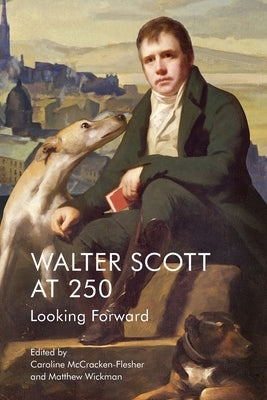
At 250, Walter Scott points toward our possible futures. Scott, although we necessarily look on his times as past, of course experienced them as present. His times were times of crisis. Scott, then, has much to share in the experience, narration, anticipation and response to change as a condition of life - a condition our era, with its existential challenges to climate, to public health, to civilization knows only too well. In Scott at 250, major scholars foreground the author as theorist of tomorrow - as the surveyor of the complexities of the present who also gazes, as we do, toward an anxious and hopeful future.
Author: Caroline McCracken-Flesher
Publisher: Edinburgh University Press
Published: 02/06/2023
Pages: 240
Binding Type: Paperback
Weight: 0.75lbs
Size: 9.21h x 6.14w x 0.51d
ISBN13: 9781474429870
ISBN10: 1474429874
BISAC Categories:
- Literary Criticism | English, Irish, Scottish, Welsh
- Literary Criticism | Subjects & Themes | Historical Events
About the Author
Caroline McCracken-Flesher is Professor of English at the University of Wyoming. She runs the University of Wyoming in Scotland program and directs UW's Center for Global Studies. Her books include Possible Scotlands: Walter Scott and the Story of Tomorrow (Oxford, 2005), The Doctor Dissected: A Cultural Autopsy of the Burke and Hare Novels (Oxford, 2012), the edited volumes Culture, Nation and the New Scottish Parliament (Bucknell, 2007), Scotland As Science Fiction (Bucknell, 2012), and Approaches to Teaching the Works of Robert Louis Stevenson (MLA, 2013). Her edition of Stevenson's Kidnapped is forthcoming from EUP.
Matthew Wickman is Professor of English at Brigham Young University and Founding Director of the BYU Humanities Center. He is the author of Literature after Euclid: The Geometric Imagination in the Long Scottish Enlightenment (University of Pennsylvania Press, 2016), The Ruins of Experience: Scotland's "Romantick" Highlands and the Birth of the Modern Witness (Pennsylvania, 2007), and many articles on Scottish literary and intellectual history and in other fields across the interdisciplinary humanities.