
Facility Verification
Please verify the inmate's facility before purchasing.
This Publication is Restricted at this Facility.

Description
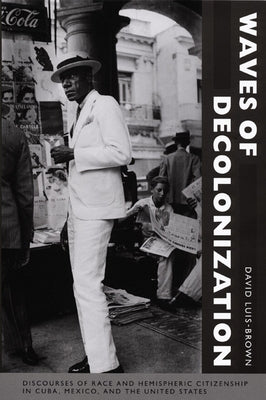
Luis-Brown traces unfolding narratives of decolonization across a broad range of texts. He explores how Martí and Du Bois, known as the founders of Cuban and black nationalisms, came to develop anticolonial discourses that cut across racial and national divides. He illuminates how cross-fertilizations among the Harlem Renaissance, Mexican indigenismo, and Cuban negrismo in the 1920s contributed to broader efforts to keep pace with transformations unleashed by ongoing conflicts over imperialism, and he considers how those transformations were explored in novels by McKay of Jamaica, Jesús Masdeu of Cuba, and Miguel Ángel Menéndez of Mexico. Focusing on ethnography's uneven contributions to decolonization, he investigates how Manuel Gamio, a Mexican anthropologist, and Zora Neale Hurston each adapted metropolitan social science for use by writers from the racialized periphery.
Author: David Luis-Brown
Publisher: Duke University Press
Published: 10/06/2008
Pages: 352
Binding Type: Paperback
Weight: 1.10lbs
Size: 9.10h x 6.10w x 0.90d
ISBN13: 9780822343660
ISBN10: 0822343665
BISAC Categories:
- Literary Criticism | American | African American & Black
- Literary Criticism | Caribbean & Latin American
- Social Science | Minority Studies
About the Author
David Luis-Brown is Associate Professor of Cultural Studies and English at Claremont Graduate University.