
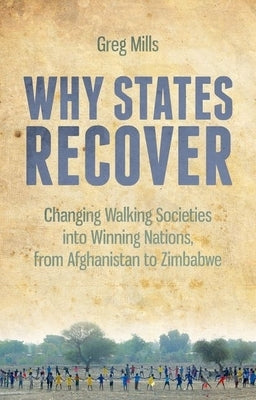

Description
State failure takes many forms. Somalia offers one extreme. The country's prolonged civil war led to the collapse of central authority, with state control devolving to warlord-led factions that competed for the spoils of local commerce, political power, and international aid. Malawi, on the
other hand, is at the other end of the scale. During President Bingu's second term in office, the country's economy collapsed as a result of poor policies and Bingu's brand of personal politics. On the surface, Malawi's economy seemed largely stable; underneath, however, the polity was fractured
and the economy broken. In between these two extremes of state failure are all manner of examples, many of which Mills explores in the fascinating and profoundly personal Why States Recover. Throughout he returns to his key questions: how do countries recover? What roles should both insiders and outsiders play to aid that
process? Drawing on research in more than thirty countries, and incorporating interviews with a dozen leaders, Mills examines state failure and identifies instances of recovery in Latin America, Asia, and Africa. For anyone interested in the reasons behind states' failure, and remedies to ensure
future economic stability, it is important reading.
Author: Greg Mills
Publisher: Hurst & Co.
Published: 03/01/2015
Pages: 700
Binding Type: Paperback
Weight: 1.60lbs
Size: 8.50h x 5.50w x 1.20d
ISBN13: 9781849044615
ISBN10: 1849044619
BISAC Categories:
- Political Science | Political Economy
- Social Science | Developing & Emerging Countries
- Business & Economics | Development | Economic Development
other hand, is at the other end of the scale. During President Bingu's second term in office, the country's economy collapsed as a result of poor policies and Bingu's brand of personal politics. On the surface, Malawi's economy seemed largely stable; underneath, however, the polity was fractured
and the economy broken. In between these two extremes of state failure are all manner of examples, many of which Mills explores in the fascinating and profoundly personal Why States Recover. Throughout he returns to his key questions: how do countries recover? What roles should both insiders and outsiders play to aid that
process? Drawing on research in more than thirty countries, and incorporating interviews with a dozen leaders, Mills examines state failure and identifies instances of recovery in Latin America, Asia, and Africa. For anyone interested in the reasons behind states' failure, and remedies to ensure
future economic stability, it is important reading.
Author: Greg Mills
Publisher: Hurst & Co.
Published: 03/01/2015
Pages: 700
Binding Type: Paperback
Weight: 1.60lbs
Size: 8.50h x 5.50w x 1.20d
ISBN13: 9781849044615
ISBN10: 1849044619
BISAC Categories:
- Political Science | Political Economy
- Social Science | Developing & Emerging Countries
- Business & Economics | Development | Economic Development
About the Author
Greg Mills is director of the Johannesburg-based Brenthurst Foundation. He is widely published on international affairs, development and security, an advisor to African governments, a regular columnist for local and international newspapers, and the author of the best-selling book Why Africa is Poor - and what Africans can do about it.
CUSTOMER REVIEWS
Write A Review